Description
Back End Development
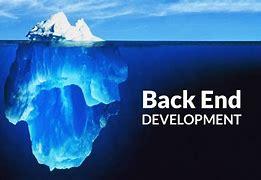
Back End Development is the server-side of web development, where developers build and maintain the server, database, and application logic that operate behind the scenes to power web applications and websites. Unlike front-end development, which focuses on the parts of a website users interact with directly, back-end development is concerned with the server-side operations that handle data processing, business logic, and application functionality.
Key Aspects of Back End Development
1. Server-Side Languages:
Programming Languages: Back-end developers use various server-side programming languages to build the logic and functionality of web applications. Popular languages include:
JavaScript (Node.js): Allows for server-side scripting using JavaScript through the Node.js runtime.
Python: Known for its simplicity and readability, used with frameworks like Django and Flask.
Java: Widely used in enterprise environments with frameworks like Spring
PHP: A server-side scripting language often used with web servers like Apache
2. Databases:
Relational Databases: Use Structured Query Language (SQL) to manage and query data in a structured format. Examples include:
MySQL: An open-source relational database management system.
PostgreSQL: A powerful, open-source object-relational database system.
Oracle: A commercial relational database management system.
NoSQL Databases: Handle unstructured or semi-structured data and are optimized for high scalability. Examples include:
MongoDB: A document-oriented NoSQL database.
Redis: An in-memory key-value store used for caching and fast data retrieval.
Cassandra: A distributed NoSQL database designed for high availability and scalability.
3. Server Management and Hosting:
Web Servers: Manage and serve web content. Examples include:
Apache: A widely-used open-source web server.
Nginx: Known for its high performance and used as both a web server and a reverse proxy.
Application Servers: Host and manage web applications. Examples include:
Tomcat: An application server for Java applications.
Node.js: Serves as both a server and a runtime environment for JavaScript.
Cloud Services: Provide scalable and managed server infrastructure. Examples include:
AWS (Amazon Web Services): Offers a wide range of cloud computing services.
Azure: Microsoft's cloud computing platform.
Google Cloud Platform (GCP): Provides cloud services including computing, storage, and data analytics.
4. APIs (Application Programming Interfaces):
RESTful APIs: Use HTTP requests to perform CRUD (Create, Read, Update, Delete) operations on resources. REST (Representational State Transfer) is a common architectural style for designing networked applications.
GraphQL APIs: A query language for APIs that allows clients to request exactly the data they need and nothing more.
5. Security and Authentication:
Authentication: Verifies the identity of users, typically using methods like password-based login, OAuth, or JWT (JSON Web Tokens).
Authorization: Manages user permissions and access to different parts of the application based on user roles.
6. Performance Optimization:
Caching: Improves performance by storing frequently accessed data in memory to reduce database load.
Load Balancing: Distributes incoming network traffic across multiple servers to ensure reliability and performance.
7. Version Control:
Git: A distributed version control system used to track code changes, collaborate with other developers, and manage code repositories.
Back End Development focuses on the server-side aspects of web applications, including server management, database interactions, application logic, and API integration. It involves using server-side programming languages and frameworks to handle data processing, ensure security, and support the functionality of web applications. By managing the underlying infrastructure, back-end developers ensure that web applications run efficiently and reliably, delivering a seamless experience for users.